Willy Boy, Willy Boy, Where Are You Going?
Willy boy, Willy boy, where are you going?
I will go with you, if I may.
I’m going to the meadow to see them a-mowing,
I’m going to help them make the hay.
Origin
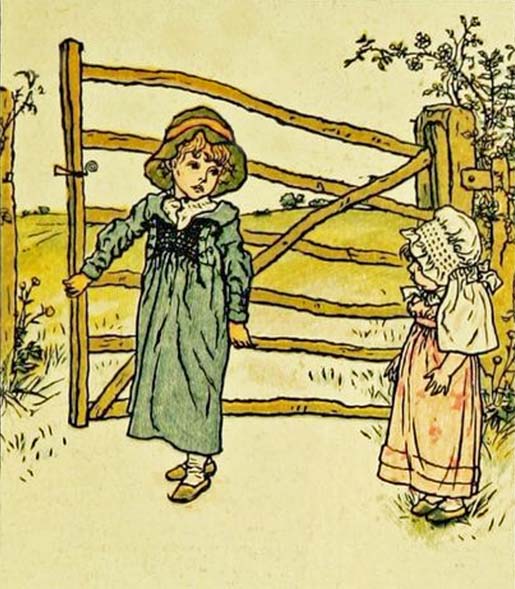
Willy Boy, Willy Boy, Where Are You Going? is one of those rhymes that grew out of everyday rural life. Long before it was written down, children in farming communities would have known what it meant to see neighbors cutting hay in the fields. By the 19th century, short conversational verses like this were popular in printed nursery collections. Kate Greenaway included it in her Mother Goose (1881), pairing the lines with an illustration of two children at a gate, poised between play and work.
What makes this rhyme interesting is that it doesn’t come from fairy tales or nonsense tradition. It reflects the real rhythm of the countryside — haymaking in summer, when even children might lend a hand. In print, it became a nursery piece; in spirit, it’s a small echo of rural childhood.
Meaning
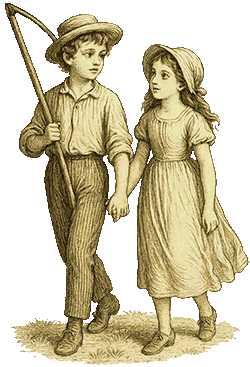 Nothing magical or strange is hiding in this verse — it’s as down-to-earth as it gets. A boy sets off toward the meadow, a girl wants to come along, and the big event of the day is haymaking. For children in the past, that wasn’t just background scenery; it was part of life. Summers meant work in the fields, the smell of cut grass, and the chance to join in with the grown-ups. The rhyme simply captures that moment — the ordinary turned into something sing-song and memorable.
The back-and-forth style makes it feel like a tiny play. One child asks, the other answers, and before long everyone’s repeating it together. It’s a rhyme about work, but also about the excitement of being included in something important.
