Little Maid, Little Maid
Little maid, little maid,
Whither goest thou?
Down in the meadow
To milk my cow.

The extended version:
Little maid, pretty maid, whither goest thou?
Down in the forest to milk my cow.
Shall I go with thee? No, not now;
When I send for thee, then come thou.
Origin
This rhyme belongs to the English nursery tradition and appears in collections from the late 19th and early 20th centuries, though its style suggests it had been passed around by word of mouth long before. Like many short verses, it probably began as a chant or teasing exchange between children before being formalized on the page.
Meaning
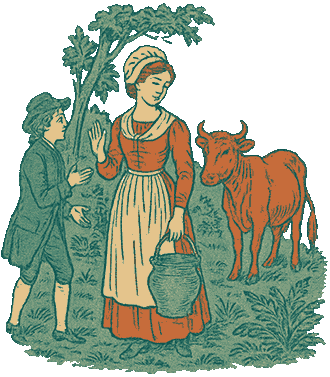
At its simplest, the rhyme is nothing more than a quick question-and-answer. Someone asks, “Where are you going?” The girl replies, plain as daylight: she’s off to milk her cow.
But the longer version turns it into something else. Suddenly, it’s a little dialogue. “Shall I go with thee?” someone asks, and the maid answers with a playful twist: “No, not now; when I send for thee, then come thou.” There’s a spark of humor there, almost flirtation. She’s not closing the door—she’s just saying the timing has to be hers.
That’s the charm of it. Children could chant the rhyme back and forth, enjoying the rhythm of the game. Yet adults listening would catch the wink beneath it—a lighthearted nod to courtship and the rules of rural life.
1. A simple retelling
Someone asks a young girl where she’s going, and she replies that she is off to milk her cow. In the longer version, the exchange becomes a playful dialogue about whether the visitor may join her.
2. The characters
- Main character: The little maid
- Other character: The speaker who asks where she is going (and asks to go along in the longer version)
3. Setting
Outdoors in a rural countryside — a meadow or forest where the cow is kept.
4. Theme
A lighthearted exchange about daily chores, with a playful hint of independence or gentle teasing.
5. Moral
No clear lesson — it’s mostly a simple, rhythmic dialogue.
