My Mother and Your Mother
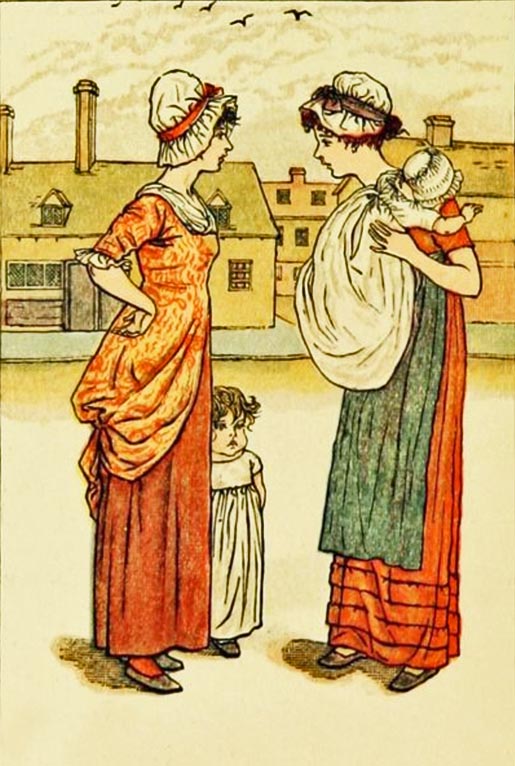
My mother, and your mother,
Went over the way;
Said my mother to your mother,
‘It’s chop-a-nose day.’
Origin
This is one of those rhymes that didn’t grow up in books but in backyards, alleyways, and schoolyards. Children chanted it in skipping games or clapping patterns, trading the words back and forth in rhythm. It’s short, silly, and just odd enough to stick in the ear — perfect material for playgrounds where nonsense carries farther than sense.
The phrase “chop-a-nose” doesn’t really mean anything. It’s nonsense in the same way that “eeny-meeny-miny-mo” is nonsense. The point wasn’t explanation but rhythm, a funny sound to shout while hands slapped together in a game. Sometimes the line was followed by playful nose-tweaks or mock-threats — the kind of pantomime that makes children squeal with laughter while insisting it isn’t fair.
By the time collectors wrote it down in the 19th and early 20th centuries, the rhyme had already scattered into dozens of playgrounds, each with its own slight twist in words or gestures.
Meaning
There isn’t a hidden moral or a folklore riddle here — the meaning lies in the play. Children loved how it sounded like adults gossiping: “My mother, and your mother…” It mimicked grown-up talk but twisted it into something absurd. Instead of passing on serious news, the mothers announce it’s “chop-a-nose day.”
That nonsense punchline is what makes it work. Children live for that sudden turn from normal to ridiculous. It’s a kind of rebellion, safe and small, where they can make fun of the serious world of parents while turning it into a game.
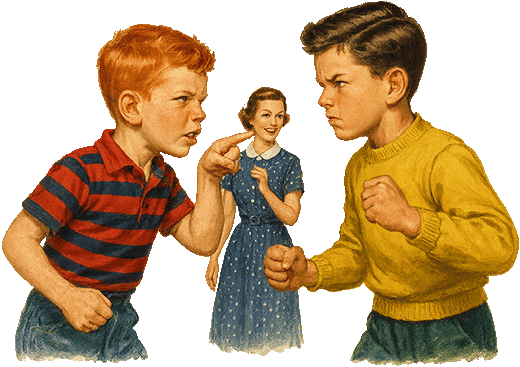
You can picture the scene: two children standing opposite, palms slapping together in a practiced rhythm, voices chiming out the lines. At “chop-a-nose day” one lunges forward to pretend-chop or tap the other’s nose, sending both into shrieks of laughter. It wasn’t about the words themselves so much as the laughter they created.
1. A simple retelling
The rhyme describes two mothers meeting and one announcing a silly, made-up occasion called “chop-a-nose day.”
2. The characters
- Main characters: The two mothers mentioned in the rhyme.
- Implied characters: The children repeating the verse during play.
3. Setting
Not specified — likely a playground or casual outdoor spot where children chant it.
4. Theme
Playground nonsense and the fun of turning everyday adult language into absurdity.
5. Moral
No direct moral — it’s a playful chant made for games and laughter.
