Away to the River
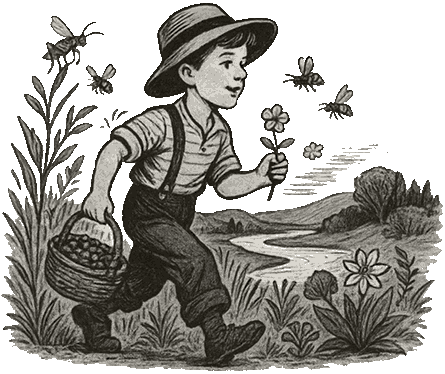
Away to the river, away to the wood,
While the grasses are green and the berries are good!
Where the locusts are scraping their fiddles and bows,
And the bees keep a-coming wherever one goes.
Oh, it’s off to the river and off to the hills,
To the land of the bloodroot and wild daffodils,
With a buttercup blossom to color my chin,
And a basket of burs to put sandberries in.
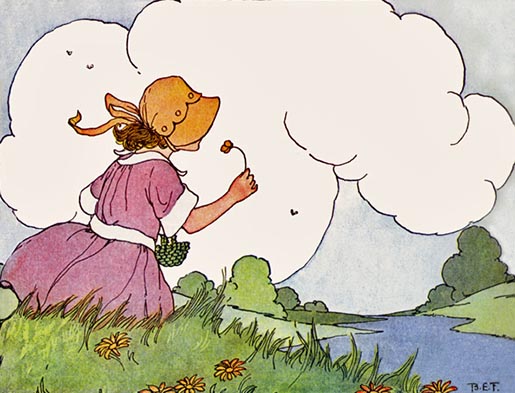
First published in The Peter Patter Book of Nursery Rhymes (1918).
This poem catches that bright moment of childhood freedom — a summer day full of sound and motion, where everything seems alive. Jackson writes with a natural rhythm that feels like running downhill barefoot: breathless, cheerful, and unselfconscious.
It’s a celebration of small wild things — berries, bees, flowers — but it also hints at early 20th-century rural life, when the “river and wood” were still part of most children’s world. The music of the locusts and the buzz of bees echo the fiddle and hum of country evenings.
Over a century later, Away to the River still feels fresh. Its joy is timeless — the same call to drop everything and run outside while the sun is up and the world smells of green.