I Went to Town on Monday
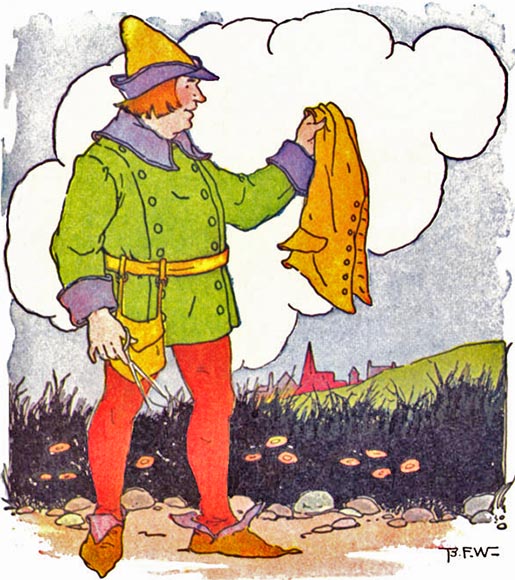
I went to town on Monday
To buy myself a coat,
But on the way I met a man
Who traveled with a caravan,
And bought a billy-goat.
I went to town on Tuesday
And bought a fancy vest.
I kept the pretty bucklestraps,
Buttonholes and pocketflaps,
And threw away the rest.
Full Version:
I went to town on Monday
To buy myself a coat,
But on the way I met a man
Who traveled with a caravan,
And bought a billy-goat.
I went to town on Tuesday
And bought a fancy vest.
I kept the pretty bucklestraps,
Buttonholes and pocketflaps,
And threw away the rest.
I went to town on Thursday
To buy a loaf of bread,
But when I got there, goodness sakes!
The town was full of rattlesnakes—
The bakers all were dead.
I went to town on Saturday
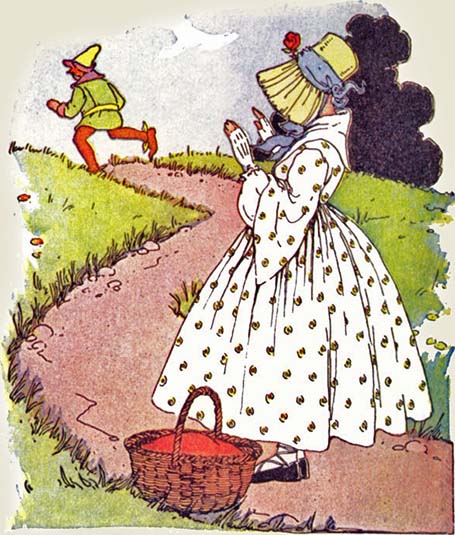
To get myself a wife,
But when I saw the lady fair
I gnashed my teeth and pulled my hair
And scampered for my life.
First published in The Peter Patter Book of Nursery Rhymes (1918), by Leroy F. Jackson.
A week of good intentions, four neat disasters. That’s the charm here. Monday starts sensible—go for a coat—then veers off into a goat. Tuesday trims a vest down to the pretty bits and tosses the rest. Thursday turns grim and absurd in the same breath: rattlesnakes in town, bakers gone, no bread after all. And Saturday? Romance takes one look and bolts for the door.
The rhythm does the work. Each stanza opens with purpose and closes with a twist. Repetition carries you along like a refrain, while the details stay clean and funny: bucklestraps saved, pocketflaps prized, a billy-goat traded on a whim. It reads like a child’s travel-log of impulses—buy this, keep that, run now.
It’s nonsense with a straight face. Practical errands collapse into tall tales, and the week becomes a little epic of misadventure. A century later, it still lands because the pattern is familiar: we plan, the day has other plans, and somehow a goat comes home instead of a coat.
