Whistle
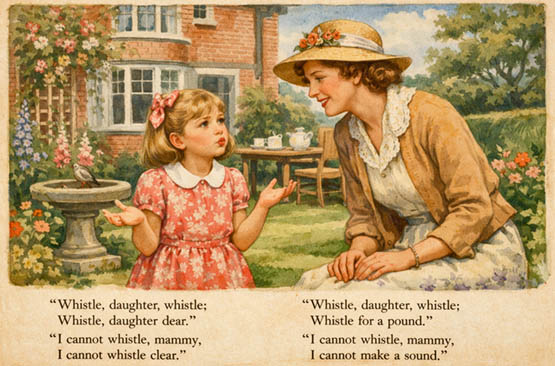
"Whistle, daughter, whistle;
Whistle, daughter dear."
"I cannot whistle, mammy,
I cannot whistle clear."
"Whistle, daughter, whistle;
Whistle for a pound."
"I cannot whistle, mammy,
I cannot make a sound."
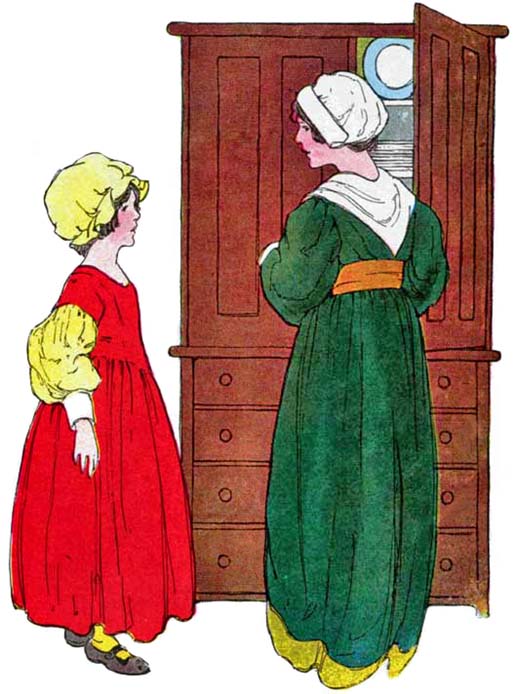
Whistle captures a familiar moment in miniature: someone being urged to do something they simply can’t do. The mother repeats her request with increasing insistence, softening it with affection and then sweetening it with a promise of money. None of it works.
What gives the rhyme its charm is the daughter’s steady response. She doesn’t argue or complain. She doesn’t promise to try harder. She just states the fact, again and again: she cannot whistle. The repetition becomes the joke. The more the mother pushes, the clearer it becomes that ability isn’t something that appears on command.
1. A simple retelling
A mother urges her daughter to whistle, even offering money, but the girl calmly insists that she cannot do it.
2. The characters
Main character: A daughter
Other characters: Her mother
3. Setting
Not specified, though it suggests a domestic setting.
4. Theme
Pressure, ability, and quiet resistance.
5. Moral
Possible lesson: Not everything can be forced, even with encouragement or reward.
