This Pig Went to Market
This pig went to market,
That pig stayed at home;
This pig had roast meat,
That pig had none;
This pig went to the barn door,
And cried “week, week,” for more.
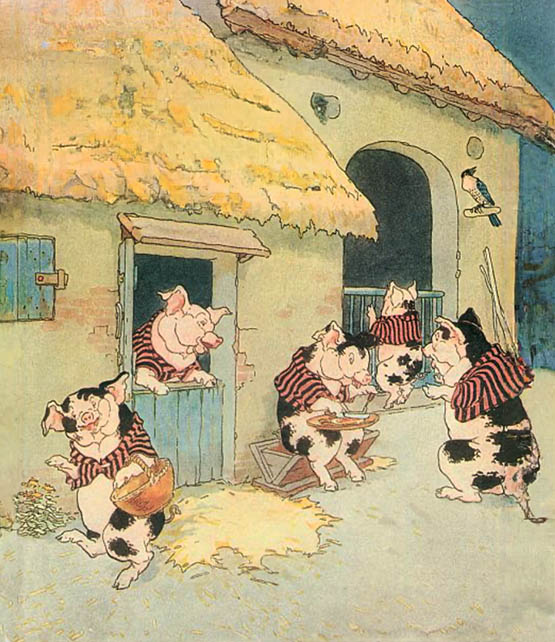
The nursery rhyme about the piggies has charmed children for centuries. Today it’s best known as “This Little Piggy,” but older printings carried slightly different wording.
Early Origins
The first line surfaced in 1728 in The Nurse’s Song, and the first full version appeared in The Famous Tommy Thumb’s Little Story-Book (c. 1760). That edition went:
This pig went to market,
That pig stayed home;
This pig had roast meat,
That pig had none;
This pig went to the barn’s door,
And cried week, week for more.
This shows the rhyme already carried the same structure we know today, though the phrasing was plainer.
 Evolution Over Time
During the 18th and 19th centuries, the rhyme appeared in many collections with small changes. By the late 19th century, the wording softened into the familiar form:
This little piggy went to market,
This little piggy stayed home,
This little piggy had roast beef,
This little piggy had none,
This little piggy cried wee, wee, wee, all the way home.
The differences mark the shift from a farmyard chant to a playful nursery rhyme:
-
Piggy replaced pig for a cuter sound.
-
Roast beef replaced roast meat, giving a funnier and more vivid image.
-
The barn door vanished; the piggy now squeals all the way home.
-
Wee, wee, wee sounded more like a child’s squeal than the older week, week.
Cultural Meaning
The rhyme is almost always recited as a fingerplay or toe game, each line matching a toe, beginning with the big toe and ending with the little one. The final line is usually punctuated by a tickle, which helps explain its enduring popularity.
Yet beneath the sing-song cheer was a practical reality: in earlier centuries, a pig “going to market” wasn’t going shopping — it was headed for slaughter. Children may not have dwelled on that detail, but Victorian adults surely knew what it implied. This contrast between playful rhythm and everyday harshness is common in nursery rhymes.
Enduring Popularity
Despite its age, This Little Piggy remains one of the most loved children’s rhymes in English. In a 2009 UK survey, it ranked as the eighth most popular nursery rhyme — proof that the piggies have kept wiggling toes and raising smiles for over 250 years.
1. A simple retelling
A series of little pigs each do something different, with the last one crying for more food.
2. The characters
- Main character: The little pigs.
- Other characters: None.
3. Setting
A farm.
4. Theme
Different circumstances create different outcomes.
5. Moral
Life isn’t always fair, and each gets a different share.