Columbus
Columbus sailed over the ocean blue
To find the United States.
In three small ships he carried his crew,
And none of the three were mates.
Full Version:
Columbus sailed over the ocean blue
To find the United States.
In three small ships he carried his crew,
And none of the three were mates.
He found a land in the western seas,
And Indians galore,
With jabbering parrots in the trees,
And sharks along the shore.
He filled his pockets with sparkling stones
And took to the mighty main,
With a couple of slaves, some nuts and cones
For the glorious king of Spain.
Now this is the tale Columbus told,
And most of the tale is true,
How he crossed the seas, a sailor bold,
In fourteen-ninety-two.
First published in The Peter Patter Book of Nursery Rhymes (1918).
There’s something wonderfully childlike about this rhyme. You can almost hear a kid reciting it proudly, certain that Columbus set out “to find the United States,” as if that were always there just waiting for him. The whole thing has that charming mix of confidence and confusion only children manage — parrots, pirates, shiny stones, and a king who must be very pleased indeed.
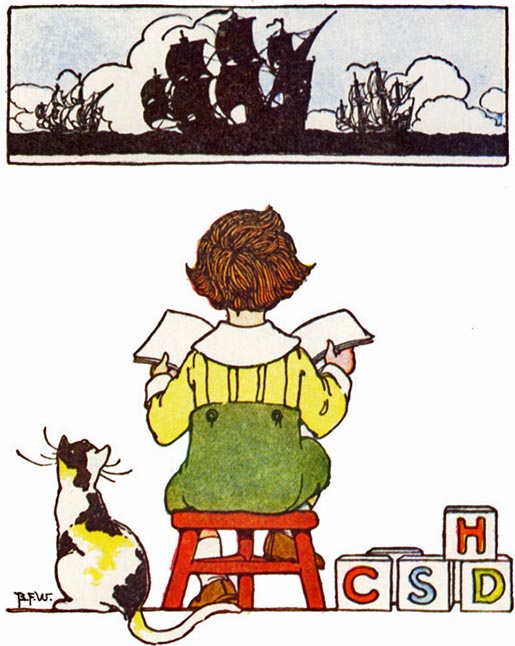
Blanche Fisher Wright’s illustration nails the feeling. A little boy sits on his stool, back turned, his whole world unfolding in his imagination. His cat sits beside him, politely pretending to listen, while toy blocks and a wooden train rest at his feet. Above them, dark ships appear against the clouds — the kind a child would picture when hearing about “three small ships” crossing the sea.
It’s not about facts or dates. It’s about wonder — about the first time a story grabs hold of your mind and sails off with it. Columbus, in this version, isn’t a historical figure at all. He’s a character in the grand adventure a child creates every time they open a book and start to dream.