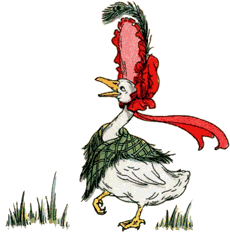
Peter, Peter Pumpkin Eater
Peter, Peter pumpkin eater,
Had a wife but couldn't keep her;
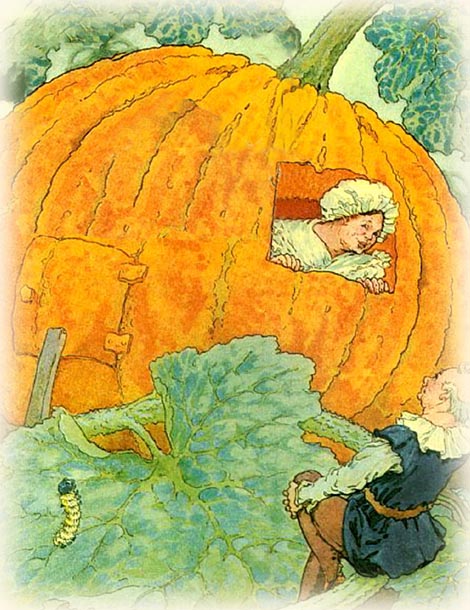
He put her in a pumpkin shell
And there he kept her well.
Peter, Peter pumpkin eater,
Had another and didn't love her;
Peter learned to read and spell,
And then he loved her very well.
The nursery rhyme Peter, Peter Pumpkin Eater originally comes from England. It appeared in print in the late eighteenth century, and later, in 1825, it was published in Boston, Massachusetts.
Chastity Belt
One interpretation connects the rhyme to the idea of a medieval chastity belt. According to this theory, Peter’s wife was unfaithful, and the “pumpkin shell” refers to iron underwear that husbands sometimes forced their wives to wear. The key would be kept by the husband, symbolizing control.
Murder
Another interpretation is far darker. In this version, Peter’s wife was a prostitute against his wishes, and he killed her, hiding her body inside a hollow pumpkin.
Unfortunately, this rhyme is not the only seemingly innocent verse with a potentially grim historical meaning.

1. A simple retelling
Peter has a wife he cannot manage, so he puts her inside a pumpkin shell and keeps her there.
2. The characters
-
Main character: Peter
-
Other mentioned: His wife
3. Setting
Not clearly defined — imagined outdoors or on a farm because of the pumpkin imagery.
4. Theme
Control, marriage, and trying to “fix” a situation rather than communicate.
5. Moral
No clear moral — although some versions suggest Peter changes and improves when he learns to read and spell.