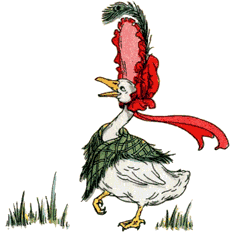
Great A, Little A
Great A, little a,
Bouncing B;
The cat's in the cupboard,
And she can't see.

Origin and History
The popular nursery rhyme Great A, Little A first appeared in print in 1700 and has been part of many cultures ever since. While the exact origin remains unknown, it is believed to be of French origin. The earliest recorded form was simply: “A, a, a! B, b, b!” Only later did it evolve into the version we recognize today.
Some researchers suggest the rhyme grew out of an old French court game, somewhat similar in spirit to When Pigs Fly. Over time, it shifted from playful chanting to a tool for early reading and counting, as it was used to teach children their ABCs.
Wordplay
The final word of the rhyme — “see” — intentionally rhymes with the letter C. This small bit of wordplay helps reinforce alphabet order in a way that feels light and memorable. Using rhyme, rhythm, and repetition makes early learning easier for children, and this little verse is a good example of that approach.
1. A simple retelling
The rhyme plays with the letters A and B, while a cat hides in a cupboard and can’t see.
2. The characters
- Main character: The speaking voice listing the alphabet letters.
- Others: A cat hiding in a cupboard.
3. Setting
Indoors, likely in a kitchen or pantry where a cupboard would be found.
4. Theme
Alphabet learning through wordplay and playful imagery.
5. Moral
No direct moral — it’s mainly a playful learning rhyme.