
Dance to Your Daddie
Dance to your daddie,
My bonnie laddie;
Dance to your daddie, my bonnie lamb;
You shall get a fishy,
On a little dishy;
You shall get a fishy, when the boat comes home.
Origins
Born along the chilly shores between England and Scotland, this rhyme carries the rhythm of fishing boats and lullabies. It was first recorded in the early 19th century, though it likely lived in oral tradition long before that. The tune that often accompanies it became a gentle lullaby and even a folk song — something mothers might hum while rocking a baby by the sea.
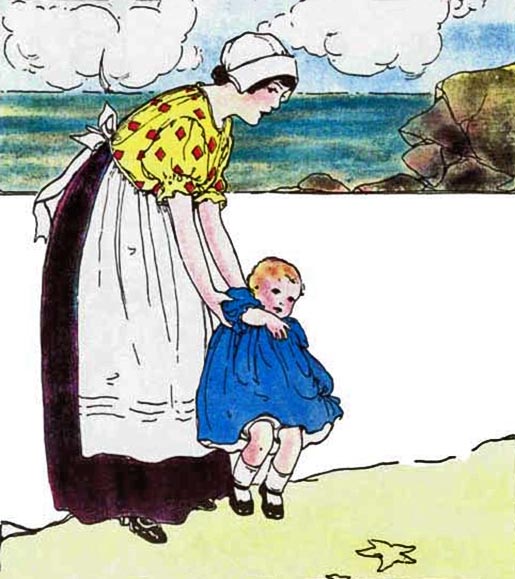
This rhyme is a little love song between a parent and child. The father is away at sea, and the mother keeps the child happy by turning waiting into a dance. Every promise — the “fishy on a little dishy” — is both a comfort and a hope that soon the boat, and Daddy, will come home.
You can almost hear the waves in it, and the rhythm of work and care. It’s about ordinary family life, but told with warmth — a mother’s way of wrapping patience, longing, and affection into one simple tune.

1. A simple retelling
A parent sings to a child, comforting them while they wait for the father to return from fishing, promising a meal when the boat comes home.
2. The characters
Main characters: the child and the singing parent
Implied character: the father away at sea
3. Setting
A coastal home or fishing village, with the rhythm of boats, tides, and daily life shaping the song.
4. Theme
Love, reassurance, family bonds, and the patience of waiting for someone who works far from home.
5. Moral
Family care and affection make difficult moments easier — especially when waiting for a loved one.