Ducks and Drakes
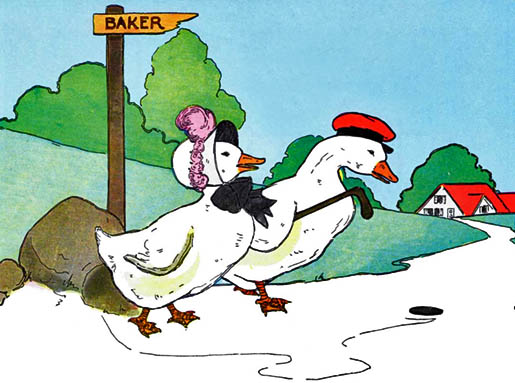
A duck and a drake,
And a halfpenny cake,
With a penny to pay the old baker.
A hop and a scotch
Is another notch,
Slitherum, slatherum, take her.
Ducks and Drakes comes from the same world where kids used to make their own fun with nothing more than a flat stone and a bit of imagination. The title refers to the old pastime of skipping stones across a pond — something children have been doing for centuries. The game was so common that the phrase eventually picked up a second meaning: wasting money or throwing it away as lightly as a pebble on water.
The rhyme itself sounds like something children would chant while choosing who goes first in a game. The little mentions of a duck, a drake, and a cheap halfpenny cake paint a small domestic scene that feels almost like playing shop. Kids didn’t need much more than tiny coins, food names, and a friendly baker to invent a whole world.
The rhythm shifts in the middle — “A hop and a scotch / Is another notch” — almost like the steps of hopscotch or the tap of pointing from one child to another. It keeps the beat moving until the finale, which lands with a burst of pure nonsense: “Slitherum, slatherum, take her.” That last line doesn’t try to mean anything. It’s there because it sounds fun, rolls off the tongue, and gives the chant a lively finish.
1. A simple retelling
The rhyme lists a duck, a drake, a cheap cake, and a small payment to the baker before slipping into playful nonsense words.
2. The characters
Main characters: A duck, a drake, a baker
Other characters: None
3. Setting
Not specified, though it hints at a small village or countryside scene.
4. Theme
Nonsense play and rhythmic word patterns children used in games.
5. Moral
No clear lesson.