Is John Smith Within?
Is John Smith within?—Yes, that he is.
Can he set a shoe? Ay, marry, two.
Here a nail and there a nail,
Tick—tack—too.
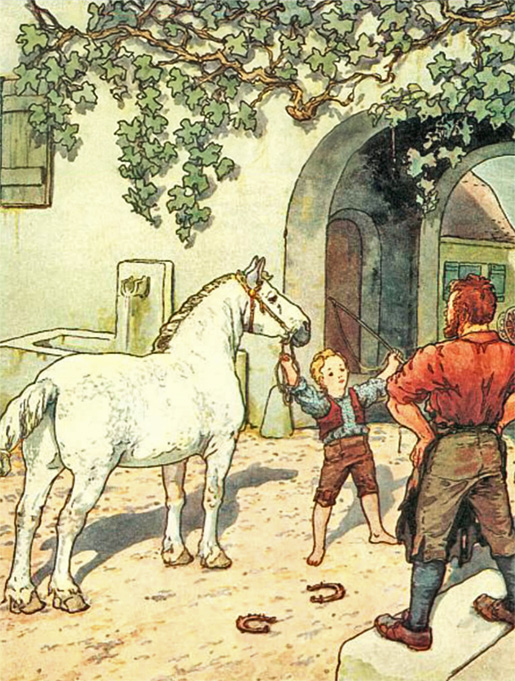
Is John Smith Within? is a tiny rhyme with a lot of charm packed inside. Someone knocks, asks for John Smith, and finds him busy at his trade. But what exactly is he doing? The last line, with its hammering “tick–tack–too,” could belong to a shoemaker fixing leather shoes or a blacksmith nailing a horseshoe. That double picture gives the verse its lasting appeal.
Origins
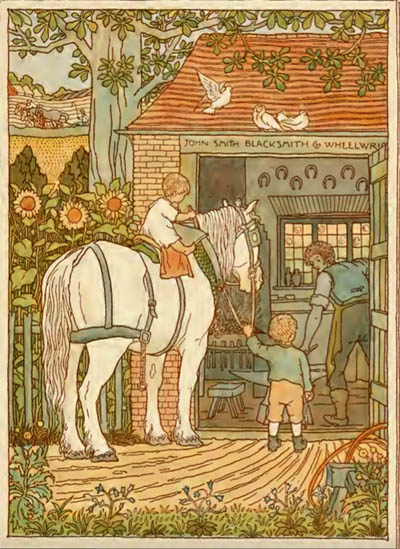 Nobody really knows when this rhyme first took shape, but it was already in print by the 1700s. “John Smith” was the most ordinary name in England, which made the verse feel familiar everywhere. The clever part is the trade: “set a shoe” could point to the cobbler on his bench or the blacksmith in his forge.
Meaning
The rhyme works almost like a miniature play. One voice asks the question, another answers, and the hammer does the rest. For children, the fun came from repeating the lines and mimicking the sound effects — “tick–tack–too.” For adults, the double meaning may have been part of the joke: whether John Smith fixed shoes or shoed horses, the result was the same — he was hard at work, and the noise told you so.
1. A simple retelling
Someone asks whether John Smith is home, learns that he is, and hears him busy setting a shoe while his hammer goes “tick–tack–too.”
2. The characters
- Main character: John Smith
- Others: The unnamed visitor asking for him
3. Setting
Not specified — likely a workshop or forge where John Smith is working.
4. Theme
Everyday work and the sound of a craftsman at his trade.
5. Moral
No clear lesson — the rhyme simply highlights a familiar working scene.