The Thieves
Tibbitts and Bibbitts and Solomon Sly
Ran off one day with a cucumber pie.
Tibbitts was tossed by a Kensington cow,
Bibbitts was hanged on a brambleweed bough,
And poor little Solomon—what do you think?
Was drowned one dark night in a bottle of ink..
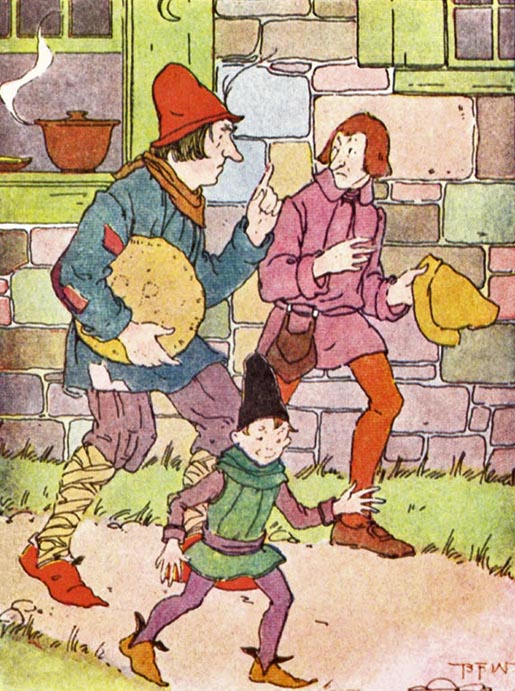
First published in The Peter Patter Book of Nursery Rhymes (1918).
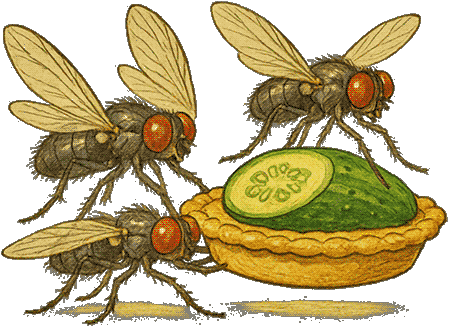
At first glance, this rhyme sounds like a cautionary tale for naughty children — but look closer, and it’s more likely about flies. The clues are all there: the cucumber pie, the brambleweed, the “bottle of ink.” These aren’t the misadventures of boys, but the tragic fates of tiny thieves who got too close to human things.
Leroy F. Jackson loved this sort of playful exaggeration — big drama told through the smallest of worlds. To a child listening aloud, it feels like a story of wild consequence; to an adult, it’s gentle irony wrapped in rhyme.
Blanche Fisher Wright’s illustration softens the story even more. Her “thieves” look more like mischievous children on a backyard escapade than insects meeting doom. She turns the danger into comedy, the punishment into play.
In the end, The Thieves works on both levels — nonsense for children, satire for grown-ups. And like many of Jackson’s rhymes, it reminds us how easily mischief can turn from daring to foolish in a blink.
1. A simple retelling
Three mischievous characters steal a cucumber pie, but each meets a strange and exaggerated fate.
2. The characters
-
Main characters: Tibbitts, Bibbitts, and Solomon Sly
-
Others mentioned: A cow (briefly)
3. Setting
Outdoors, in a playful or imaginary world where ordinary objects become dangerous.
4. Theme
Mischief, consequences, and exaggerated humor.
5. Moral
Actions have consequences — especially when they involve stealing.