Using Nursery Rhymes to Support Early Reading Skills
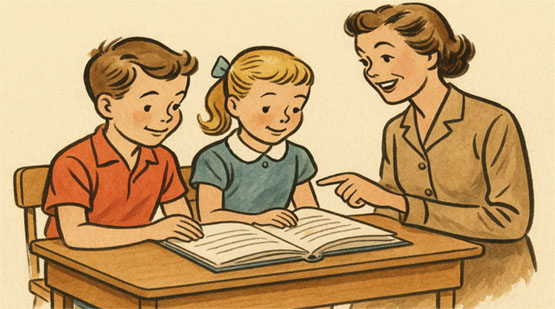
Most parents and teachers already use nursery rhymes without giving it much thought. They’re part of bedtime, playtime, car rides, and the first years of school. What many don’t realize is that every time a child chants “Twinkle, Twinkle, Little Star” or “Humpty Dumpty sat on a wall,” something important is happening: the foundations of reading are forming.
Most adults can still remember at least a few rhymes from their own childhood — sometimes word-for-word. Those little verses stick because they’re rhythmic, repetitive, and fun. And that’s exactly why they’re one of the easiest and most natural ways to start teaching children how language works.
Why Nursery Rhymes Work
Because nursery rhymes repeat sounds and structure, they give children exactly what they need at that age: consistency, rhythm, and a chance to join in. When they hear “star… far… high… sky,” their ears start noticing how words fit together.
Most of the time, kids memorize these rhymes without even thinking about it. They repeat them in the car, in the bath, or while running around the living room. That kind of playful memorizing builds language awareness in a way flashcards never could.
And maybe the biggest advantage: rhymes make learning feel like fun. Kids love hamming it up — clapping, laughing, and shouting the lines. It doesn’t feel like schoolwork at all; it feels like fun, and that’s what pulls them in.
What Skills They Build
Most adults think kids are just having fun when they chant “Hickory Dickory Dock.” But underneath the giggles, a lot of learning is happening.
Nursery rhymes tune children’s ears to patterns — rhyme, rhythm, and the beat of syllables. That early awareness of sound is one of the biggest building blocks of reading.
As kids repeat the lines, they start hearing tiny differences between similar sounds — cat, cap, tap. That kind of sound discrimination later helps them connect letters to sounds when they read.
The language in rhymes is simple, but incredibly effective for vocabulary growth. Words repeat, phrases repeat, and young brains latch onto them without effort.
Repetition also strengthens memory. Children don’t need flashcards — chanting the same lines a few times is enough to lock them in.
And maybe the best part: rhymes give children a natural sense of fluency. When they speak or chant in rhythm, it becomes easier later to read smoothly instead of stopping at every single word.
How to Use Nursery Rhymes in Daily Life
You don’t need a lesson plan or a stack of worksheets — nursery rhymes fit naturally into the day. Say them during breakfast, while tying shoes, or while waiting in line at the grocery store. Little moments count.
Pick a few favorites and repeat them often. The more familiar they become, the more confident the child feels.
If you can, add hand motions or movement. Stomping, clapping, tiptoeing — anything that matches the rhythm makes the rhyme more memorable.
A fun trick: pause before the last rhyming word and wait. Most children can’t resist jumping in with the answer.
Acting the rhyme out also works wonders. One child becomes the cat, another the cow, someone else the queen — suddenly the rhyme becomes a mini story.
Drawing pictures from the rhyme can help too. A simple sketch of a mouse, a star, or a sheep connects sound and meaning, which is exactly how reading begins.
Once the rhyme feels natural, you can gently move toward print. First comes the voice — then the page.
Once a child can sing or say a rhyme from memory, that’s the perfect moment to show it written down. Now the words aren’t strangers anymore — they already live in the child’s mind and ear.
As you read, gently point to repeated words:
star… star, run… run, cat… cat.
If they get curious about one of those words, follow that interest. You can even search that word on this website to find other rhymes that use it — almost like a little word treasure hunt.
No drilling, no pressure — just helping the eyes notice what the ears already know.
Rhymes also make it easy to introduce early word families. If a child laughs through “cat” in a rhyme, it’s a small step to point out other -at words: cat, hat, bat, mat. Suddenly reading feels like a pattern rather than a puzzle.
Over time, this simple pairing — spoken first, written second — builds a bridge toward real reading skills without losing the fun.
Once a child is familiar with a rhyme, you can gently guide them toward real reading. Start with simple sight words that repeat in the rhyme — words like the, and, go, little. Seeing them again and again helps the brain store them automatically.
Rhymes also make spelling patterns visible. Children hear that cat, hat, and bat sound alike, so it’s only natural to point out that they look alike too. The connection between sound and print becomes much clearer when it’s anchored in something playful and familiar.
You can even bring out magnetic letters or small word cards and build little word families together. Change one letter at a time — cat → hat → bat → mat — and let the child hear and see how only a tiny change creates a brand-new word.
No rushing, no testing — just small discoveries that feel like play.
Keep It Playful
It’s easy to slip into “teaching mode,” especially when we hope our child will learn fast. But with nursery rhymes, slow and playful always works better.
Try not to rush into letters or worksheets before the child is ready. If they’re still enjoying the rhyme just for the sound of it, that’s already learning. The goal isn’t to drill or quiz — it’s to enjoy language together.
And while kids often want the same rhyme again (and again), it helps to rotate a few favorites. A little variety keeps their curiosity awake and gives them new sounds and patterns to explore.
When in doubt, follow the rule:
If they’re smiling, laughing, or joining in… you’re doing it right.
Once a child knows a rhyme well, that’s the perfect moment to loosen the rules and play with it. Kids love bending language, and nursery rhymes give them a safe place to do it.
Invite them to swap words, change characters, or make the rhyme completely ridiculous:
Twinkle, twinkle, little shoe…
I am running after you.
It doesn’t have to make sense. In fact, the sillier it is, the better.
When children laugh at their own invention, something important happens — the rhyme becomes theirs. That sense of ownership builds confidence, and confidence fuels reading far more than drills ever could.
Playful changes turn the rhyme into a game, and before long, the child isn’t just repeating language… they’re creating it.
It turns out all those silly songs you already know are doing something pretty impressive—they’re helping build a reader. Keep repeating them, playing with the sounds, and pointing to the words when your child is ready. The magic happens quietly, and then suddenly… they’re reading.