I'll Tell You a Story
I'll tell you a story
About Mary Morey,
And now my story's begun.
I'll tell you another
About her brother,
And now my story's done.
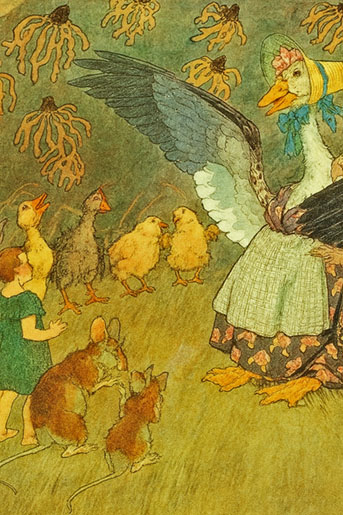
This little rhyme, sometimes titled Mary Morey, is better known by its opening line: I’ll Tell You a Story. First appearing in nursery collections of the late 18th and early 19th centuries, it belongs to the tradition of playful “nonsense verses.
Origins
Unlike moralistic rhymes that carried hidden lessons, this one delights in having none at all. A story is promised, but before it begins, it is already over. This abrupt ending was meant to amuse children who expected a tale but instead got a trick. Such teasing verses were common in oral tradition, where rhythm, rhyme, and surprise mattered more than meaning.
A Rhyme About Nothing
The charm of I’ll Tell You a Story lies in its self-cancelling nature. By saying everything and nothing at once, it gently pokes fun at the idea of storytelling itself. It may also have served a practical role in nurseries and classrooms, filling time, sparking giggles, or testing whether children were paying attention.
1. A simple retelling
The rhyme promises a story about Mary Morey and her brother, but ends abruptly before anything actually happens.
2. The characters
Mary Morey and her unnamed brother, mentioned but never developed.
3. Setting
No setting is given — part of the joke is that the story never takes shape.
4. Theme
Playful nonsense and the fun of breaking expectations.
5. Moral
No moral — the humor comes from the unfinished “story.”