
Old Chairs to Mend
If I’d as much money as I could spend,
I never would cry “old chairs to mend”;
Old chairs to mend, old chairs to mend;
I never would cry “old chairs to mend.”
If I’d as much money as I could tell,
I never would cry “old clothes to sell”;
Old clothes to sell, old clothes to sell;
I never would cry “old clothes to sell.”
Origins
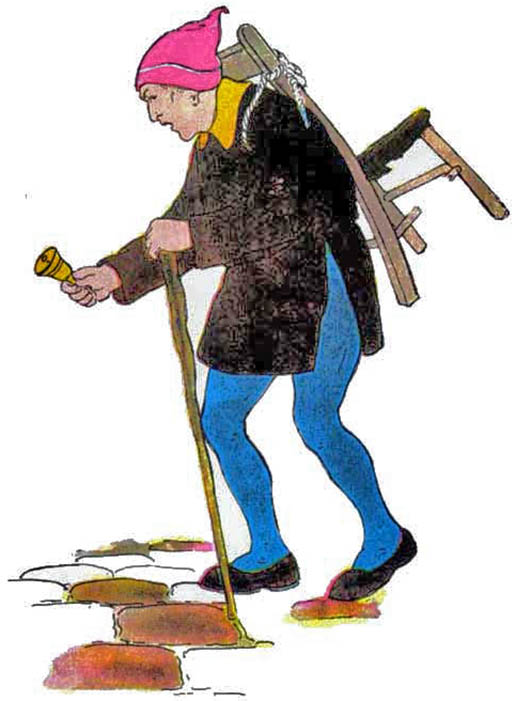
This is an example of an old English street cry — the kind that real tradesmen would call through town as they offered their services. Chair menders and rag sellers were common traveling workers in the 18th and 19th centuries, especially in cities like London. The rhyme likely began as a real working man’s chant before it slipped into nursery tradition.
Meaning
It’s a daydream in disguise. The speaker is poor — calling through the streets, mending chairs or selling old clothes to survive — and he’s imagining how life would be if he were rich. If he had money, he wouldn’t have to shout these trade cries at all. It’s practical, not sentimental — a glimpse into working-class reality, mixed with a little wishful thinking.
Before newspapers and posters, people sold things by shouting. Cities were filled with these cries — Buy my flowers! Knives to grind! Chairs to mend! Children heard them daily, and many were later turned into rhymes. This one preserves that sound world — the repetition, the rhythm, the hopeful determination. It carries real history beneath its simplicity.
1. A simple retelling
The speaker imagines being rich enough to stop calling out street cries like “old chairs to mend” and “old clothes to sell.”
2. The characters
- Main character: A street hawker or tradesman.
- Others: None mentioned.
3. Setting
A town or city street where tradesmen call out their services.
4. Theme
Daydreaming about escaping hard work and poverty.
5. Moral
No clear lesson — the rhyme simply contrasts labor with wishful thinking.