Old Grimes
Old Grimes is dead, that good old man,
We ne'er shall see him more;
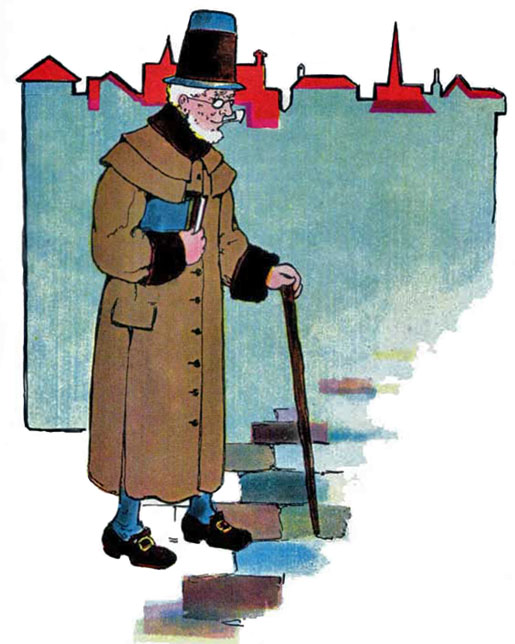
He used to wear a long brown coat
All buttoned down before.
Old Grimes first appeared in print in 1822, written by American poet Albert Gorton Greene. The rhyme became widely known soon after and was reprinted many times in 19th-century collections, eventually entering the nursery tradition.
The verse is unusual among nursery rhymes: instead of nonsense, royalty, or mischief, it gives a brief, affectionate remembrance of a kindly old man. His “long brown coat all buttoned down before” is the detail that survived, suggesting he was remembered for simplicity rather than greatness.
Some scholars see the rhyme as a light parody of sentimental funeral poetry popular in the early 1800s. Others take it at face value — a small, tender farewell that children could recite without fear or gloom. Because of its gentle tone, the verse was often used to teach memorization, rhythm, and vocal expression.
Despite its short length, Old Grimes had a surprisingly long afterlife. Greene later expanded it into a much longer humorous poem, filled with additional eccentric details about the old man. The extended version circulated in magazines, but the simple four-line stanza is the one that stayed in nursery lore.
1. A simple retelling
A kind old man named Old Grimes has passed away and is remembered for his long brown buttoned coat.
2. The characters
- Main character: Old Grimes
- Other characters: Not mentioned
3. Setting
Not specified
4. Theme
Memory and affection for someone who has passed away.
5. Moral
No clear lesson.